Emergency
Chipped or Broken Tooth: What to Do Right Now
First aid for a chipped or broken tooth, and when it is an emergency.
3 min readBy Hiral Desai, DDS, MDS, D. ABDSM
Pain when you bite, or new sensitivity to hot and cold, can be signs of a cracked tooth. Here are the most common reasons teeth crack and how to prevent it.

The short answer
Teeth usually crack because of a combination of weakened enamel and pressure: grinding or clenching, large fillings, untreated decay, age-related wear, sudden temperature changes or an injury. A crack that hurts when you bite or release, or that makes a tooth sensitive, should be checked soon so it doesn't spread.
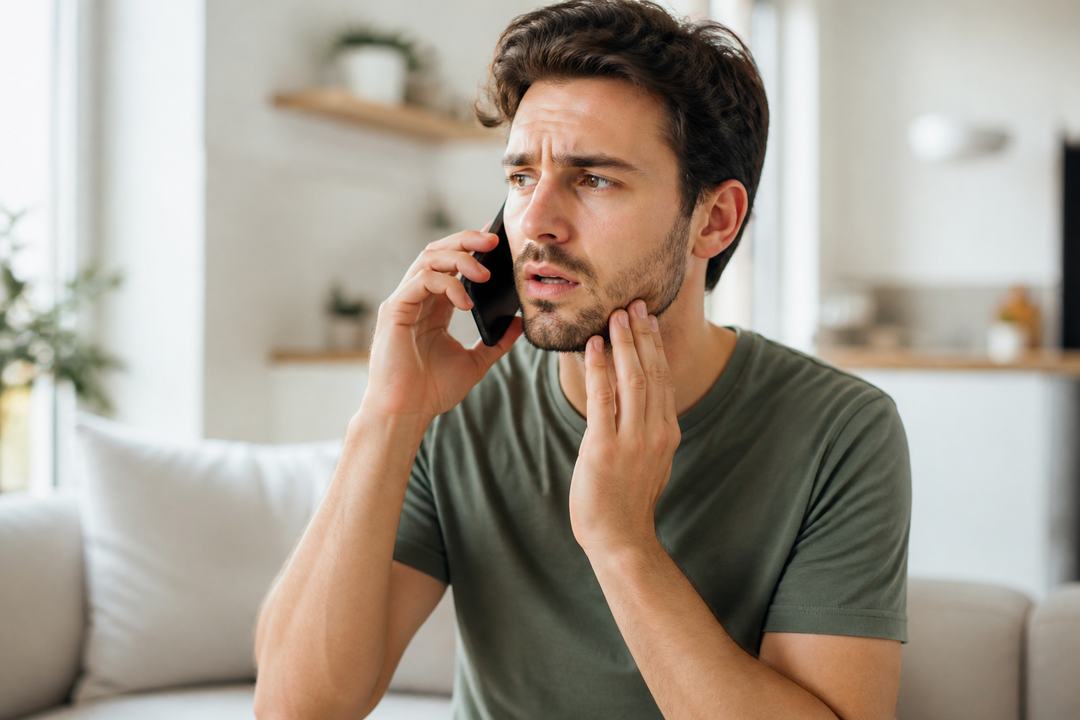
Have you noticed pain when you chew or bite, or new sensitivity to hot and cold? These can be signs of a cracked tooth. Knowing why teeth crack helps you get treatment early and prevent new cracks.
If you notice any of these, see an emergency dentist in Tustin promptly. A small crack is much easier to treat than one that has spread.
When brushing and flossing are skipped, plaque and bacteria build up and cause tooth decay. Decay and weakened enamel make teeth more likely to develop small cracks. A steady daily routine keeps teeth strong.
Years of chewing and biting gradually wear teeth down. Older teeth, especially those with past dental work, are more likely to crack.
Grinding or clenching, often during sleep, puts heavy force on your teeth. Over time it wears the enamel and can cause cracks. If you grind your teeth, talk to your dentist about a custom night guard.
A fall, a sports injury or biting down hard on something like ice, a popcorn kernel or a hard candy can crack a tooth. Wear a mouthguard for sports and avoid chewing on hard objects.
Going quickly from very hot to very cold food or drinks makes enamel expand and contract. Over time this can lead to cracks.
Untreated decay weakens the structure of the tooth from the inside. As decay spreads deeper, the tooth becomes more likely to crack.
Teeth with large fillings have less natural tooth structure left and are more likely to crack under pressure. If you have large fillings, ask your dentist whether a crown would protect the tooth.
Think you have a cracked tooth? Call (714) 505-9462 for a same-day visit.
Book a consultationA cracked tooth won't heal on its own, and cracks can spread over time. See your dentist soon if a tooth hurts when you bite, is newly sensitive, or if you can see or feel a crack. Depending on the crack, treatment may be a filling, bonding, a crown or, if the crack has reached the nerve, a root canal. If a piece of your tooth has broken off, read Chipped or Broken Tooth: What to Do Right Now.
We see same-day emergency patients from Tustin, Irvine, City of Orange, Santa Ana and the rest of Orange County. Larwin Square Dentistry is at 604 E 1st St in the Larwin Square Shopping Center in Tustin. We're open Monday to Wednesday and Friday from 9:00 AM to 5:30 PM, and every Saturday from 8:00 AM to 2:30 PM. Call (714) 505-9462 or book online.
The most common reasons are grinding or clenching, large fillings, untreated decay, age-related wear, sudden temperature changes and injuries. Often more than one of these is involved.
No. Enamel can't repair a crack, and cracks can grow over time. A dentist can repair the tooth before the crack spreads.
A crack with severe pain, swelling or a broken piece of tooth should be seen the same day. Even a crack without pain should be checked soon.
Wear a night guard if you grind, avoid chewing hard objects, treat cavities early and keep up with regular checkups.
If you think you have a cracked tooth, don't wait for it to get worse. Call us and we'll find a time to examine it and recommend the right repair.
First aid for a chipped or broken tooth, and when it is an emergency.
Why toothaches feel worse at night, and safe ways to ease the pain until morning.
Lingering sensitivity, swelling, a darkening tooth: the signs that a tooth may need a root canal.
This guide is general information, not a diagnosis. Book a visit for advice about your own teeth.