
Everyday Care
Root Canal Aftercare: Recovery, Pain Relief and What to Eat
What to eat, how long soreness lasts and the warning signs to call about after a root canal.
7 min readArticle
When infection or inflammation reaches the inside of a tooth, a root canal can save it. Here are seven signs to watch for, and what the treatment involves.

The short answer
The most common signs you might need a root canal are lasting tooth pain, sensitivity to hot or cold that lingers, a tooth that turns gray or dark, tenderness when you bite, swollen gums or a pimple on the gum near one tooth, and a cracked or injured tooth. Only an exam and X-ray can confirm it, so see a dentist if you notice any of them.
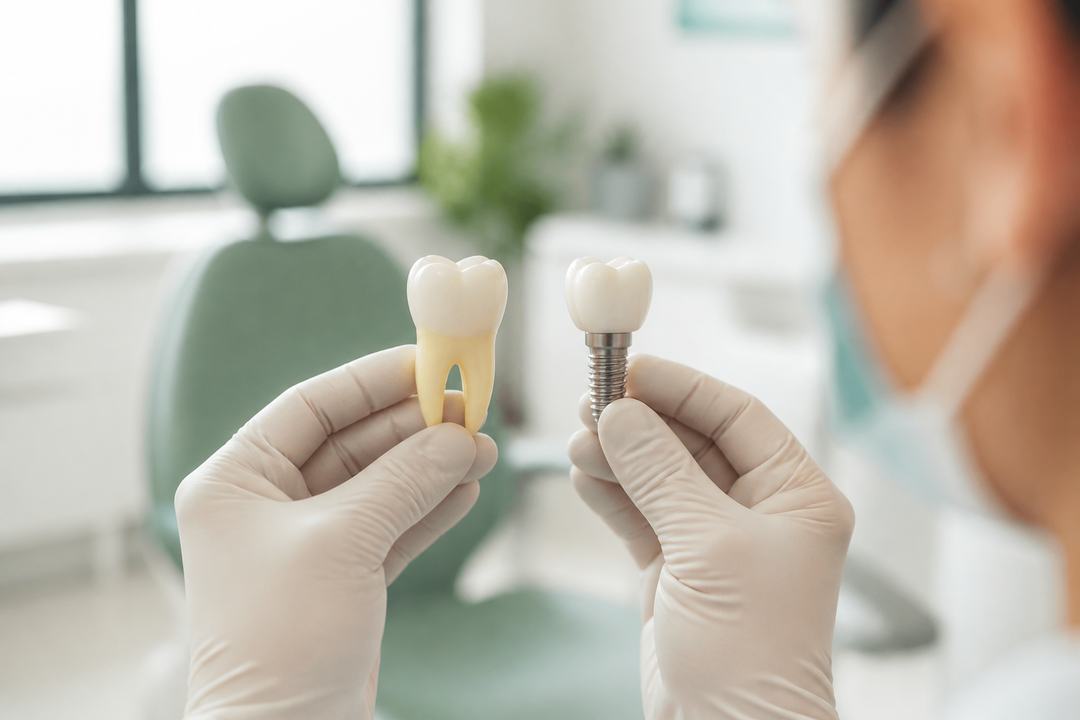
Dental infections are common, and many can be treated before they spread. But if decay or infection reaches the pulp, the soft inner layer of the tooth that holds the nerve and blood vessels, you may need root canal treatment. Millions of root canals are done successfully in the United States every year, and the treatment saves teeth that might otherwise be lost.
Here is what happens during a root canal and seven signs you might need one.
Before treatment, your dentist takes X-rays to see how far the decay and infection have spread. See our root canal treatment in Tustin page to learn more.
Pain that won't go away is one of the most common signs. It may:
The pain may also spread to your jaw, face or other teeth. Read Toothache at Night for ways to ease it until your visit.
Does a tooth hurt for a long time after hot coffee or ice cream? Sensitivity that lingers after the hot or cold is gone can mean the nerve is damaged. Don't wait; see your dentist.
A small bump on the gum near one tooth, sometimes with bleeding or pus, can be a sign of infection at the root. (Bleeding gums when you brush are more often a sign of gum disease.)
An infection or injury inside the tooth can cut off the blood supply to the pulp, causing the tooth to turn gray or dark. Your dentist may recommend a root canal.
A tooth that is tender to touch or hurts when you bite can mean infection has spread to the tissue around the root, sometimes with an abscess.
Swelling near a tooth, even without pain, can be caused by infection from a dying pulp. Your dentist will examine the area and may suggest a root canal.
A chipped or cracked tooth lets bacteria reach the pulp and cause infection. An injury can also damage the pulp even when the tooth doesn't look broken. In both cases, your dentist may recommend a root canal. Read Why Are My Teeth Cracking All of a Sudden?
These signs don't always mean you need a root canal, but they do mean you should see a dentist. Early treatment relieves pain and gives the best chance of saving the tooth. If you're weighing your options, read Root Canal or Extraction and Implant.
Tooth pain that won't go away? Call (714) 505-9462.
Book a consultationWe diagnose and treat infected teeth for patients from Tustin, Irvine, City of Orange, Santa Ana and the rest of Orange County, with same-day visits for tooth pain when possible. Larwin Square Dentistry is at 604 E 1st St in the Larwin Square Shopping Center in Tustin. We're open Monday to Wednesday and Friday from 9:00 AM to 5:30 PM, and every Saturday from 8:00 AM to 2:30 PM. Call (714) 505-9462 or book online.
Yes. Sometimes the pulp dies without much pain. A dark tooth, a pimple on the gum or swelling can be the only signs, and an X-ray may show the infection.
The tooth is numbed, so most people feel pressure rather than pain during treatment. Mild soreness for a few days afterward is common. Read our root canal aftercare guide.
No. Antibiotics can help control a spreading infection, but they can't remove the infected pulp. The tooth needs a root canal or an extraction.
The infection can spread, cause an abscess and lead to losing the tooth. See a dentist as soon as you notice the signs.
If you notice any of these signs, book a visit. Dr. Desai will take an X-ray, explain what's going on and recommend the best way to save your tooth.
What to eat, how long soreness lasts and the warning signs to call about after a root canal.
Save the tooth or replace it? How to choose between a root canal and an implant.
What changes the cost of a root canal and crown, and how to pay without insurance.
This guide is general information, not a diagnosis. Book a visit for advice about your own teeth.