Cosmetic
Should You Brush Before or After Whitening Strips?
When to brush around whitening strips so they work well without extra sensitivity.
5 min readArticle
Homemade teeth whiteners are everywhere online, but some can damage your enamel. Here is what can help, what to skip and safer ways to whiten.
The short answer
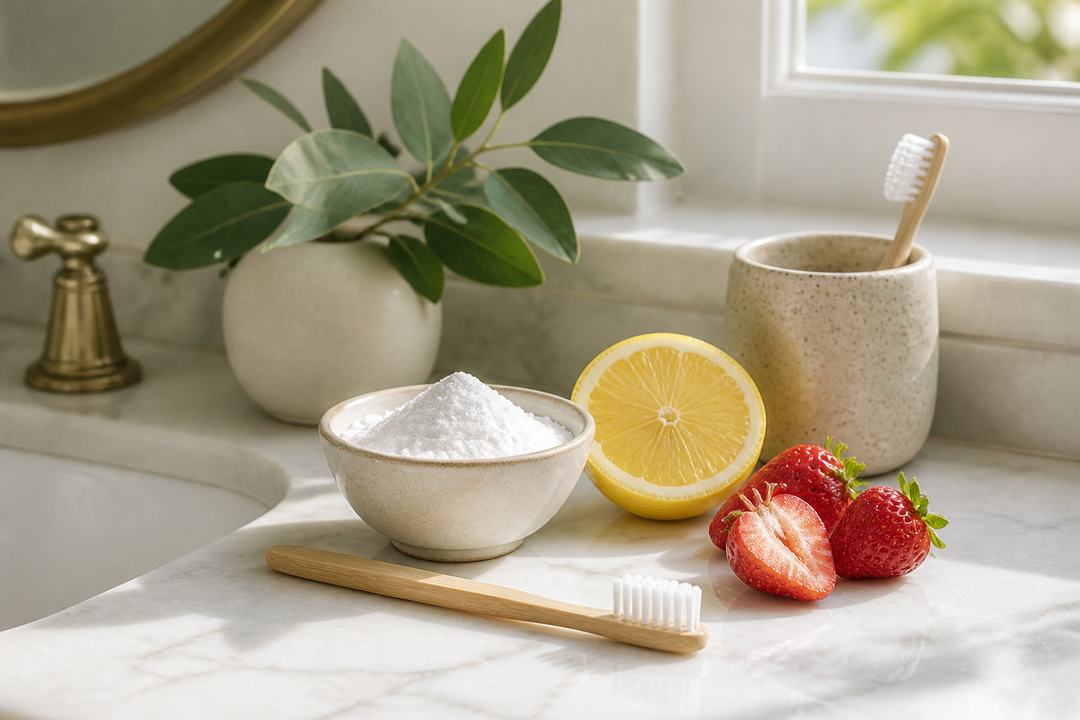
The safest homemade option is a toothpaste with baking soda, which can lift surface stains. Hydrogen peroxide works in low-strength store products, but homemade mixes can irritate gums and cause sensitivity. Oil pulling and fruit don't whiten teeth in a meaningful way, and rubbing acidic fruit, lemon juice or vinegar on your teeth can erode enamel. For real results, ask your dentist about professional whitening.
A brighter smile is one of the most common cosmetic wishes, and homemade teeth whiteners are all over the internet. Some can remove surface stains, but others can damage your enamel or irritate your gums. Here is what helps, what to skip and when to choose professional whitening.
Teeth naturally look more yellow with age. Enamel wears thinner over time, and the layer beneath it (dentin) becomes thicker and darker. Gum recession can also expose root surfaces, which are naturally more yellow than enamel. Coffee, tea, red wine and tobacco add surface stains.
Baking soda is a mild abrasive that can help remove surface stains. A toothpaste that contains baking soda is a simple, safe way to use it every day.
Hydrogen peroxide is the active ingredient in many whitening products. In properly made, low-strength products such as whitening strips, it can lighten teeth. Homemade mixes are harder to control and can irritate your gums and make teeth sensitive, especially if used often. If you want to try at-home whitening, choose a tested product and follow the directions. Read Should You Brush Before or After Whitening Strips?
Oil pulling means swishing oil, often coconut oil, around your mouth. There isn't good evidence that it whitens teeth, and it doesn't replace brushing and flossing.
Crunchy fruits and vegetables such as apples, carrots and celery help clean your teeth as you chew and keep saliva flowing. But rubbing fruit on your teeth is not recommended. Strawberries and pineapple contain acids, and acid can soften enamel.
If your teeth are very discolored, or if whitening won't help (for example, with crowns or fillings), bonding or veneers may be better options. Read Dental Bonding vs Veneers.
Want a brighter smile without the risk? Ask about professional whitening.
Book a consultationWe offer professional whitening and cosmetic care for patients from Tustin, Irvine, City of Orange, Santa Ana and the rest of Orange County. Larwin Square Dentistry is at 604 E 1st St in the Larwin Square Shopping Center in Tustin. We're open Monday to Wednesday and Friday from 9:00 AM to 5:30 PM, and every Saturday from 8:00 AM to 2:30 PM. Call (714) 505-9462 or book online.
A toothpaste with baking soda is the safest homemade option. It can remove surface stains, but it won't change the natural color of your teeth.
Low-strength, tested whitening products are generally safe when used as directed. Homemade peroxide mixes are harder to control and can irritate gums and cause sensitivity.
No. Lemon juice is acidic and can erode enamel, which can make teeth look more yellow over time.
It depends on your habits. Coffee, tea, red wine and smoking cause new stains faster. Good home care and regular cleanings help results last.
Before you try a DIY trick, ask us. Dr. Desai can check your teeth and recommend the safest way to get the brighter smile you want.
When to brush around whitening strips so they work well without extra sensitivity.
Bonding or veneers for chips, gaps or stains? Cost, lifespan and looks compared.
Why gum disease causes bad breath that mints cannot fix, and how treating the gums clears it up.
This guide is general information, not a diagnosis. Book a visit for advice about your own teeth.