
Emergency
Toothache at Night: How to Ease the Pain Until Morning
Why toothaches feel worse at night, and safe ways to ease the pain until morning.
3 min readBy Hiral Desai, DDS, MDS, D. ABDSM
A dental abscess is an infection that won't go away on its own. Here are the signs, why it needs prompt treatment and what to expect at your visit.

The short answer
A dental abscess is a pocket of pus caused by a bacterial infection in a tooth, the gum or the bone around it. Signs include severe throbbing pain, swelling, fever and a bad taste. It won't heal on its own and can spread, so see a dentist the same day. Go to the emergency room if you have trouble breathing or swallowing, or swelling spreading to your neck or eye.
A dental abscess is not something to wait out. If you have severe tooth pain, swelling or a fever, you may have an abscess that needs treatment today. Ignoring it can turn a treatable infection into a serious medical emergency. Here is what you need to know.
A dental abscess is a pocket of pus caused by a bacterial infection. It can form inside a tooth, in the gums or in the bone that holds your teeth. It usually starts when bacteria get into damaged tooth tissue or inflamed gums.
Most people describe the pain as throbbing, sharp and constant. Common signs include:
Some people notice a small bump on the gum that looks like a pimple. This is called a fistula. It may drain pus and briefly ease the pain, but the infection is still there.
Dental infections don't stay contained on their own. Without treatment, the bacteria can spread beyond your mouth to your jaw, neck and throat. This can cause a condition called Ludwig's angina, which can block your airway. The infection can also spread to the bloodstream and cause sepsis. Both can be life-threatening.
Antibiotics alone are not enough. They can slow the infection, but they can't drain the abscess or remove its source. Only dental treatment can do that.
Children, older adults and people with weakened immune systems are at even greater risk, so prompt care is especially important for them.
Think you have an abscess? Call (714) 505-9462 for a same-day visit.
Book a consultationDr. Hiral Desai will start with an exam and X-rays to find the infection and see how far it has spread. You'll get a clear explanation of your options before treatment begins. Depending on the abscess, treatment may include:
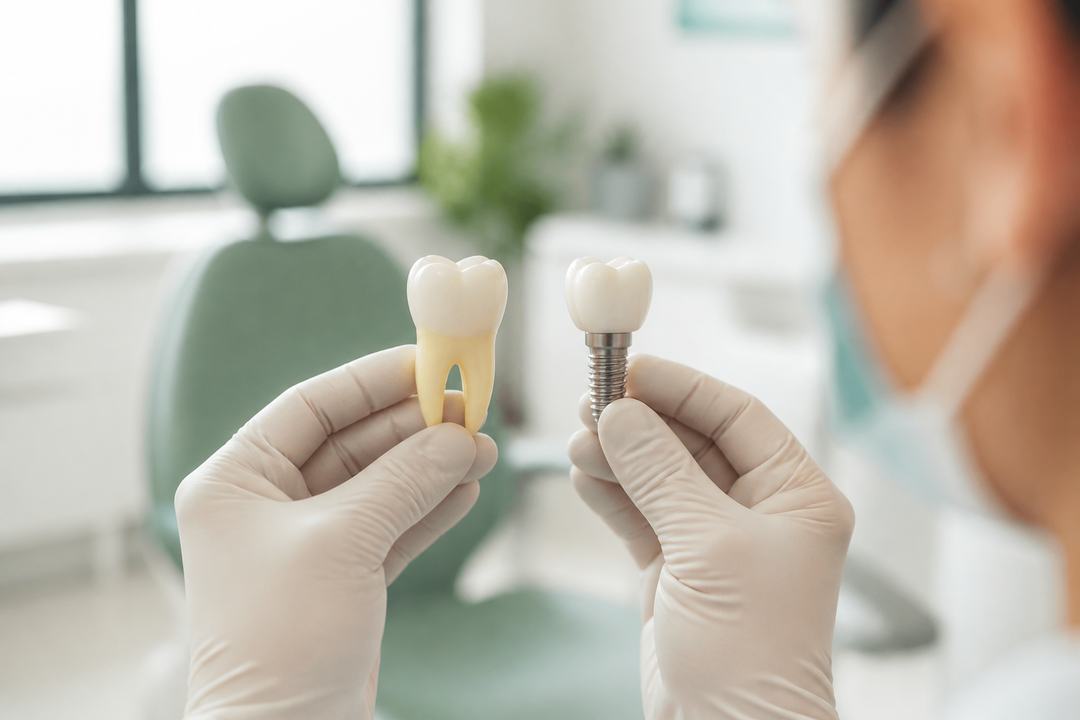
If a tooth is lost because of an abscess, dental implants are one of the most effective long-term replacements. Dr. Desai can walk you through your options once the infection has cleared.
Most abscesses can be prevented. Cavities and gum disease are the main triggers, and both respond well to early treatment:
Regular cleanings remove plaque and tartar that brushing can't, and give your dentist a chance to spot early signs of infection.
Not every toothache is an emergency, but some symptoms need immediate attention. Call our office right away if you have a fever with tooth pain or swelling in your face or jaw. Go to the emergency room right away if you have trouble breathing or swallowing, can't open your mouth, or swelling is spreading to your neck or below your eye.
Even if your symptoms feel mild, an abscess that has been there for more than a day or two needs treatment. If the pain suddenly eases, the abscess may have burst. That does not mean the infection is gone. Read Toothache at Night for how to stay comfortable until your visit.
We see emergency patients from Tustin, Irvine, City of Orange, Santa Ana and the rest of Orange County, with same-day visits for tooth pain and swelling when possible. Larwin Square Dentistry is at 604 E 1st St in the Larwin Square Shopping Center in Tustin. We're open Monday to Wednesday and Friday from 9:00 AM to 5:30 PM, and every Saturday from 8:00 AM to 2:30 PM. Call (714) 505-9462 or book online.
No. The pain may ease if the abscess bursts, but the bacteria are still there. Without treatment, the infection will keep spreading.
In severe cases, yes. If the infection spreads to the jaw, neck or bloodstream, it can cause serious and potentially fatal complications. That is why prompt treatment matters.
Call a dentist as soon as possible. If you have a high fever, swelling in your neck or trouble breathing or swallowing, go to the emergency room right away. For other symptoms, call Larwin Square Dentistry at (714) 505-9462 for same-day guidance.
Not always, but it is a common treatment when the infection is inside the tooth. Dr. Desai will recommend the best way to clear the infection and save the tooth when possible.
Most people feel much better within a few days. Full recovery depends on how severe the infection was and the treatment done. You'll get aftercare instructions and a follow-up visit.
A dental abscess can become dangerous quickly. If you think you have one, call us today and we'll get you seen as soon as possible.
Why toothaches feel worse at night, and safe ways to ease the pain until morning.
Lingering sensitivity, swelling, a darkening tooth: the signs that a tooth may need a root canal.
Save the tooth or replace it? How to choose between a root canal and an implant.
This guide is general information, not a diagnosis. Book a visit for advice about your own teeth.