
Implants
Bone Grafting for Dental Implants: When You Need It
Why some patients need a bone graft before an implant, and what recovery is like.
3 min readBy Hiral Desai, DDS, MDS, D. ABDSM
A sinus lift adds bone to the upper jaw so an implant has a solid base. Here is who needs one, what the procedure involves and what recovery is like.
The short answer
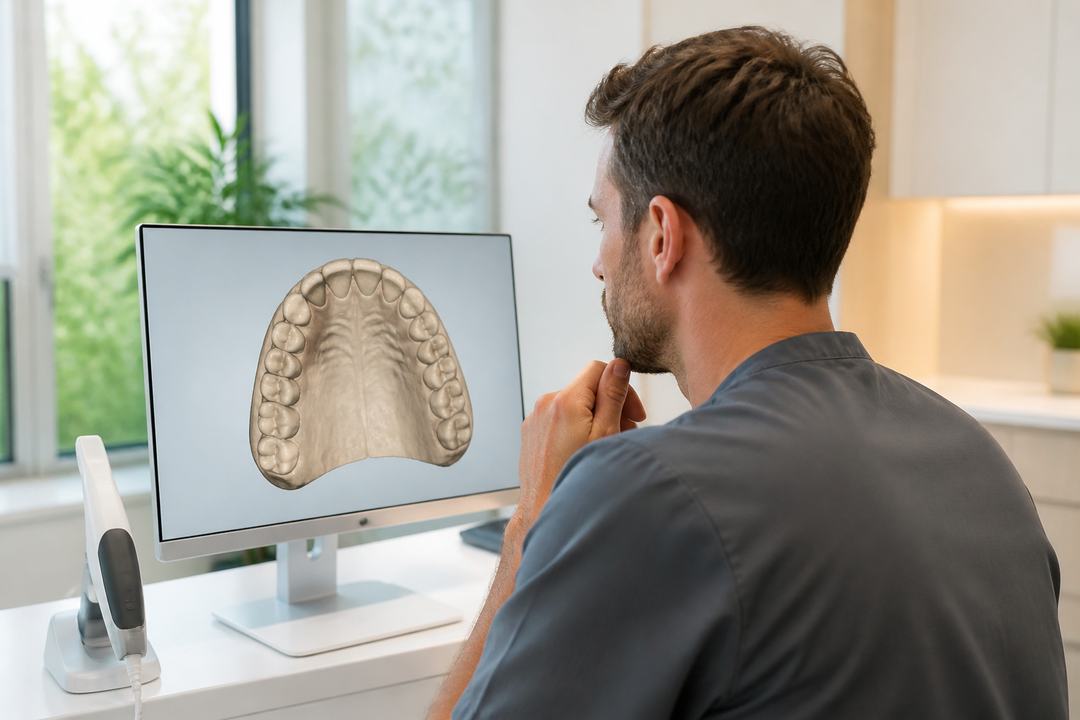
A sinus lift adds bone to the upper back jaw by gently lifting the sinus membrane and placing bone graft material underneath. You may need one if you are missing upper back teeth and there isn't enough bone height to hold an implant, often because of bone loss after tooth loss or gum disease. Your dentist confirms this with a 3D scan.
Sinus lifts are becoming more common as more people choose dental implants. The procedure adds bone to the upper jaw when there isn't enough to support an implant. Here is how to tell if you might need one, what the procedure involves and how it helps.
A sinus lift (also called a sinus augmentation) adds bone to the upper jaw in the area of the back teeth. The sinus sits just above these teeth. When there isn't enough bone height between the jaw and the sinus, the sinus membrane is gently lifted and bone graft material is placed underneath it. Once it heals, the new bone gives an implant a stable base.
When upper teeth, especially molars, are missing for a while, the bone in that area shrinks. A sinus lift can rebuild the bone needed for an implant.
Periodontal disease can cause significant bone loss in the jaw. If there isn't enough bone left to support an implant, a sinus lift may be needed. Read Bone Grafting for Dental Implants.
Some people naturally have less bone in the upper jaw, or a sinus that sits low. A sinus lift builds up the bone so an implant can be placed.
Healing usually takes several months, and this time is important for the implant's long-term success. Learn more on our sinus lift page.
Told you need more bone for an implant? Book a consultation with Dr. Desai.
Book a consultationMany people worry that a sinus lift will be painful or risky. In reality:
Read Does Dental Implant Surgery Hurt? for more on comfort and sedation.
Follow your dentist's instructions closely. Common tips include:
Complications are uncommon. The main ones are:
A careful assessment with imaging before surgery and a sterile setting during it help keep the procedure safe.
Your dentist will look at your jaw and sinus on X-rays or a 3D scan to see if you have enough bone for an implant. If you need a sinus lift, you'll get a treatment plan that covers each step, from the graft to the final tooth. Read Am I a Candidate for Dental Implants?
Dr. Desai has postgraduate training in periodontics and oral implantology and performs sinus lifts and implant treatment for patients from Tustin, Irvine, City of Orange, Santa Ana and the rest of Orange County. Larwin Square Dentistry is at 604 E 1st St in the Larwin Square Shopping Center in Tustin. We're open Monday to Wednesday and Friday from 9:00 AM to 5:30 PM, and every Saturday from 8:00 AM to 2:30 PM. Call (714) 505-9462 or book online.
The gum heals in a couple of weeks, but the new bone usually needs several months to mature before an implant can be placed.
It is usually done under local anesthesia. Most people describe the soreness afterward as similar to having a tooth removed.
Sometimes, if there is enough bone to hold the implant steady. Your dentist will decide based on your scan.
Blowing your nose creates pressure in the sinus that can move the graft. Your dentist will tell you how long to avoid it.
If you've been told you don't have enough bone for an implant, book a consultation. Dr. Desai will review your scan and explain your options.
Why some patients need a bone graft before an implant, and what recovery is like.
Bone loss, diabetes, smoking or gum disease? Who can get implants, and how a 3D scan tells you.
What implant surgery feels like, sedation options, and a day-by-day recovery timeline.
This guide is general information, not a diagnosis. Book a visit for advice about your own teeth.