
Anxiety & Sedation
Afraid of the Dentist? Sedation Options in Tustin and Irvine
Nervous about the dentist? Gentle ways we help, and the sedation options available.
3 min readBy Hiral Desai, DDS, MDS, D. ABDSM
Worry about pain is one of the most common reasons people delay implants. Most patients say it was easier than they expected. Here is what the surgery feels like, how sedation helps, and what recovery looks like day by day.

The short answer
Most patients feel pressure, not pain, during implant surgery because the area is fully numbed. Soreness for the first 2 to 3 days is common and usually managed with over-the-counter pain relief. Sedation is available for anxious patients.
The area is fully numbed before we start, so most patients feel pressure and vibration rather than pain. A single implant is often placed in about an hour.
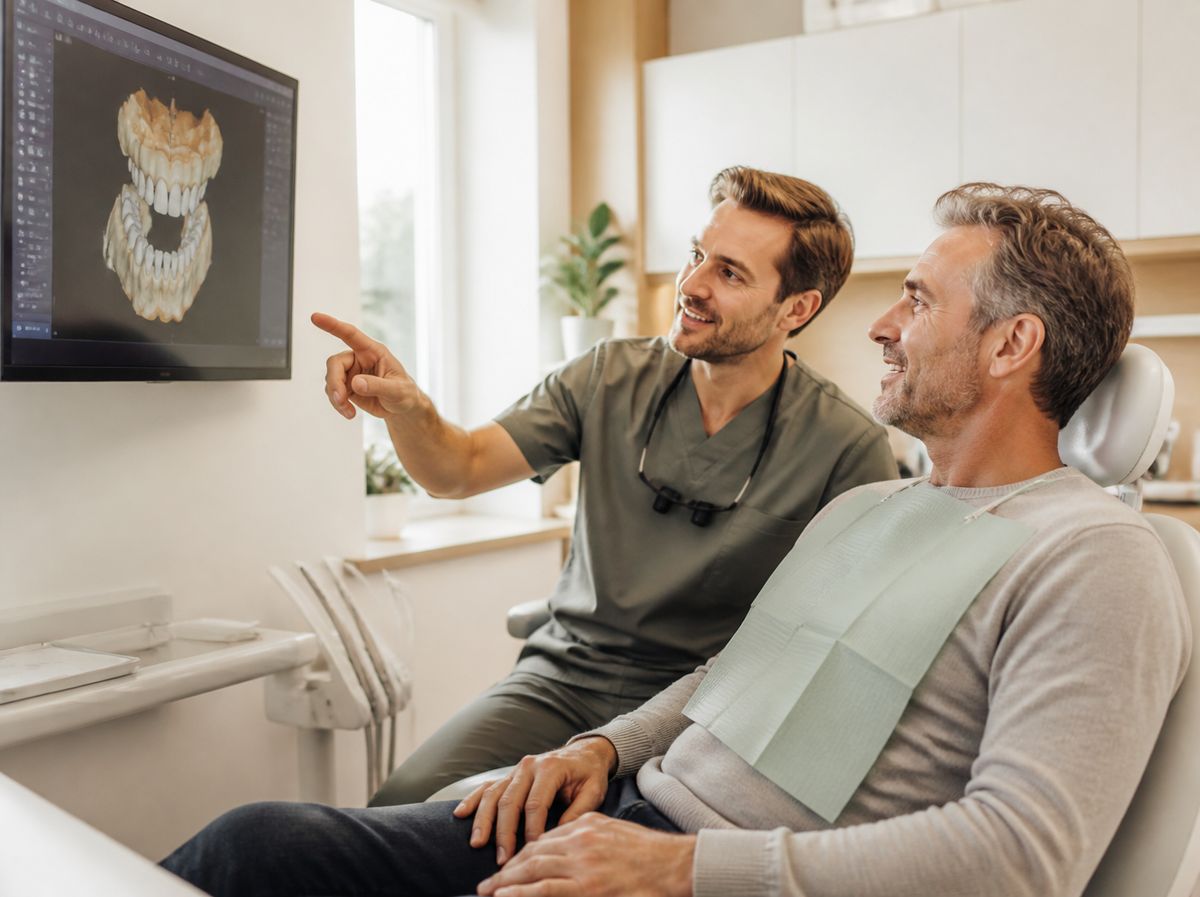
Your 3D scan lets Dr. Desai plan the exact position in advance, which keeps the procedure precise and efficient.
You can choose the level of comfort that suits you.
Numbs the area completely. You are awake and can drive yourself home.
A prescribed tablet taken before your visit helps you feel calm and drowsy. You'll need someone to drive you. Read more in our guide to sedation.
Everyone heals differently, but this is a typical pattern after a single implant.
Some oozing, numbness wearing off and mild soreness. Rest, use cold packs and take pain relief as advised.
Swelling usually peaks, then starts to settle. Soreness is often managed with over-the-counter medicine.
Most people feel close to normal. Stitches, if used, dissolve or are removed.
The implant fuses with the bone. Then your final crown is made and fitted.
Nervous about surgery? Ask about oral sedation at your free implant evaluation.
Book a consultationStick to soft, lukewarm foods for the first few days, such as yogurt, eggs, soup, mashed potatoes and smoothies (with a spoon, not a straw). Avoid chewing on the implant side, and avoid hard, crunchy or sticky foods until we say it's fine. See Caring for Your Gums After Dental Implant Surgery.
Call (714) 505-9462. If swelling affects breathing or swallowing, go to the ER or call 911.
Usually 3 to 6 months from placement to final crown, depending on healing and whether you needed a graft. For gum care while you heal, read Caring for Your Gums After Dental Implant Surgery.
Having surgery close to home makes follow-up visits easier. Our office is at 604 E 1st St in the Larwin Square Shopping Center in Tustin, and Saturday appointments are available. Call (714) 505-9462 or book online.
Many people return to desk work the next day. If you have sedation or several implants, plan for a day or two of rest.
No. If you have oral sedation, arrange for someone to drive you home.
Avoid strenuous exercise for a few days, because it can increase bleeding and swelling.
Yes. Mild swelling usually peaks around days 2 to 3, then settles.
It depends on the number of implants and whether a graft is needed. We'll give you a time estimate at your consultation.
For front teeth, a temporary tooth is often possible so you don't have a visible gap. Ask about options for your case.
We plan your numbing, sedation and recovery before the day of surgery, so you know exactly what to expect.
Sources: ADA MouthHealthy: Anesthesia and Sedation · ADA MouthHealthy: Implants
Nervous about the dentist? Gentle ways we help, and the sedation options available.
Bone loss, diabetes, smoking or gum disease? Who can get implants, and how a 3D scan tells you.
What implants cost at our Tustin office, what is included, and what can change your price.
This guide is general information, not a diagnosis. Book a visit for advice about your own teeth.